False or distorted allegations can make coping with false allegations feel like an overwhelming need to explain yourself.
You may want to contact everyone who has heard the story, produce every message and correct every detail. This is understandable, particularly when your reputation or important relationships feel threatened.
However, living in a permanent state of defence can become emotionally exhausting.
Why do we feel compelled to respond?
An allegation can threaten your identity. You may think:
- What if people believe it?
- What if silence makes me look guilty?
- How can they say that after everything I did?
- Why can nobody see what is happening?
This can lead to anxiety, difficulty sleeping, repeatedly checking social media and mentally rehearsing explanations.
Decide what genuinely requires a response
Not every comment deserves the same response.
A false allegation that affects your employment, children, safety or legal position may require proper documentation and professional advice. An inflammatory social-media post designed to provoke a reaction may require a different approach.
Before responding, ask:
- Who actually needs this information?
- What outcome am I trying to achieve?
- Is the person open to evidence?
- Will responding protect me, or prolong the conflict?
- Would professional advice be safer?
Protecting yourself is not the same as retaliating
You can take a situation seriously without joining a public argument.
Depending on the circumstances, this may include:
- Saving messages and screenshots
- Keeping a dated factual record
- Restricting contact
- Reviewing privacy settings
- Speaking to a solicitor, employer or relevant professional
- Discussing the emotional effect with a counsellor
Avoid responding while highly distressed. A pause gives you time to decide what serves your wellbeing and longer-term interests.
Reclaiming your energy
Someone else may control the story they tell, but they do not control your identity.
Your character is also communicated through your consistent actions, values and relationships. You do not need to perform your innocence for every observer.
Counselling may help you process the anger, fear and helplessness false allegations can cause. It can also help you rebuild boundaries and decide where your energy is best placed.
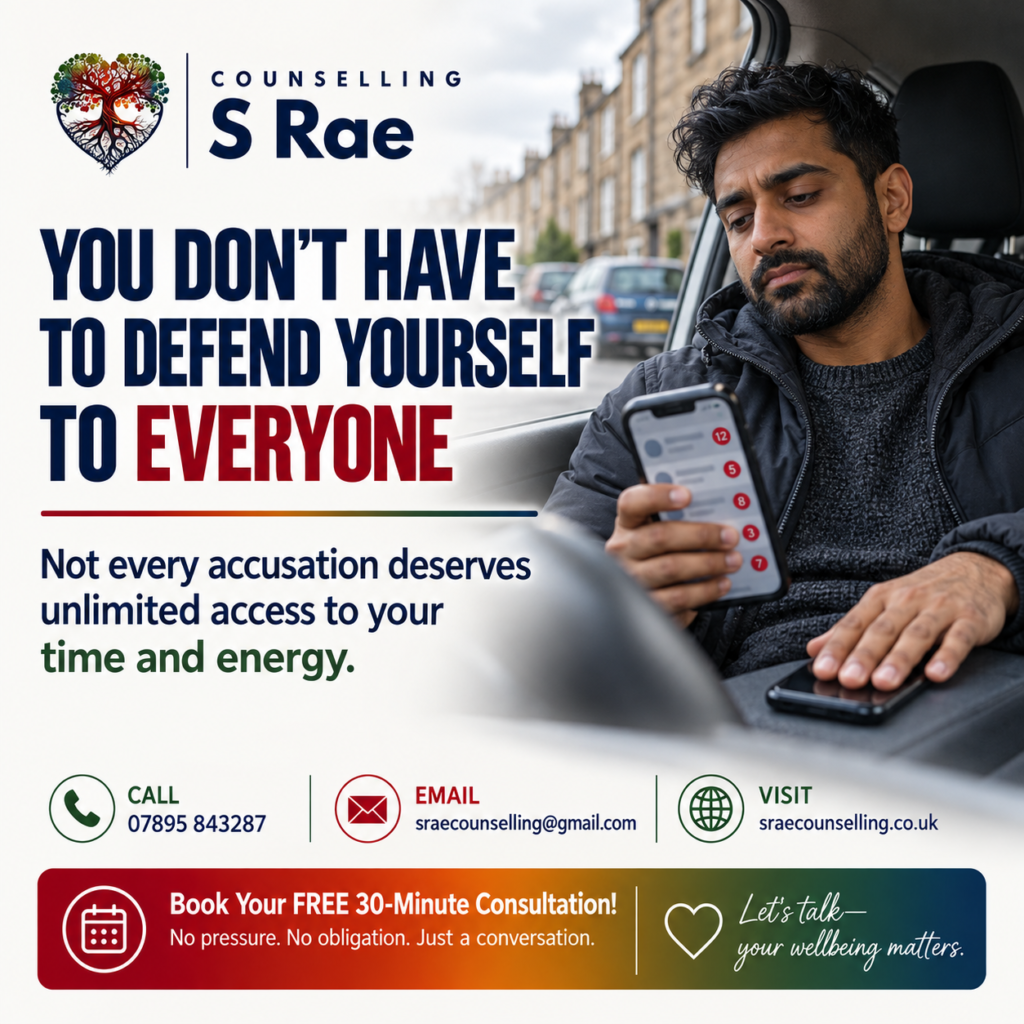
S Rae Counselling offers a free 30-minute consultation. Call 07895 843287, email sraecounselling@gmail.com or visit sraecounselling.co.uk.