Have you ever tried to discuss someone’s hurtful behaviour? However, emotional manipulation, reversing victim and offender, blame shifting, counselling after emotional abuse can surface in such exchanges.
Initially you may express a straightforward concern, yet minutes later you defend your character. However, you explain your intentions or apologise for upsetting the other person. This pattern is emotional manipulation, reversing victim and offender, blame shifting, counselling after emotional abuse.
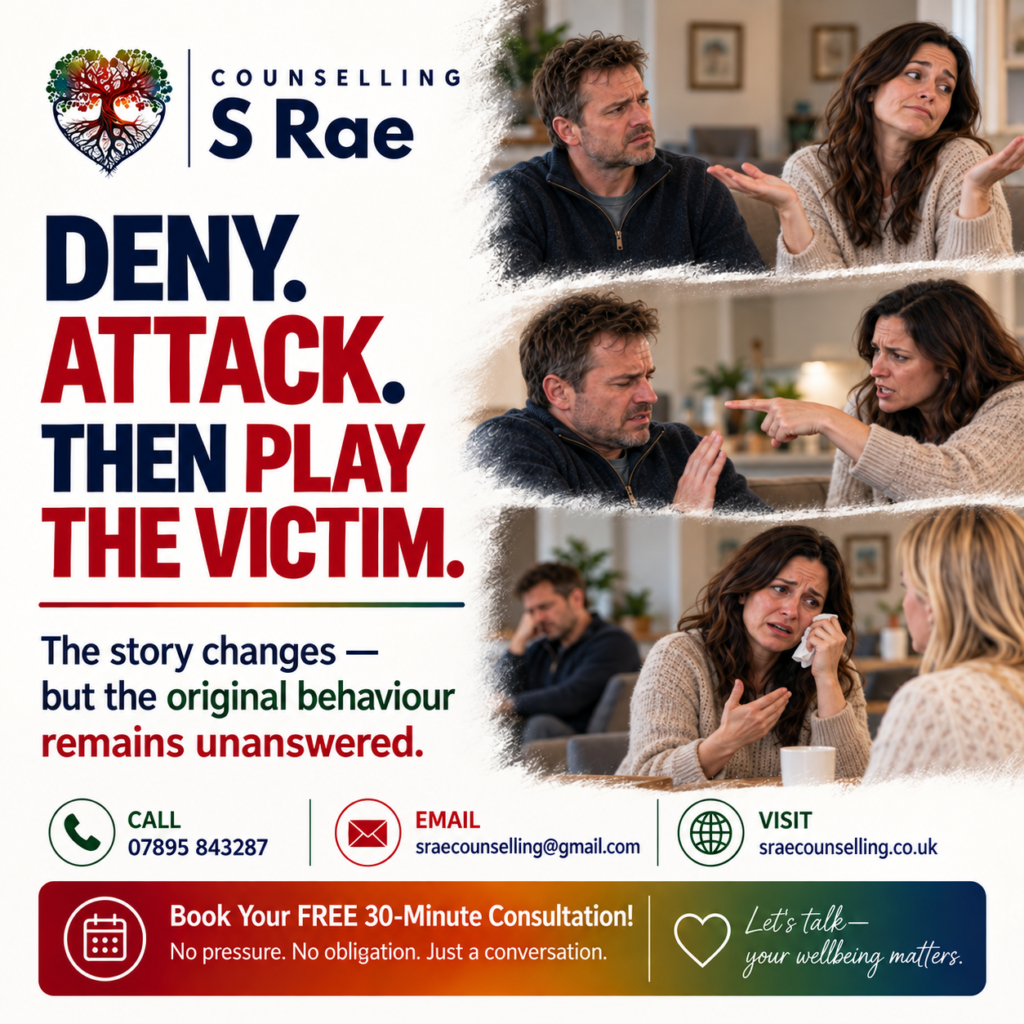
This pattern is sometimes known as DARVO.
What does DARVO mean?
DARVO stands for Deny, Attack, Reverse Victim and Offender. However, it describes how an abuser shifts blame and conceals wrongdoing. This concept involves emotional manipulation, reversing victim and offender, blame shifting, counselling after emotional abuse.
DARVO stands for: emotional manipulation, reversing victim and offender, blame shifting, counselling after emotional abuse.
- Deny: “That never happened.”
- Attack: “You are too sensitive, difficult or unstable.”
- Reverse Victim and Offender: The person being questioned presents themselves as the victim and portrays the person raising the concern as the aggressor.
It can happen in romantic relationships, families, friendships, workplaces, and other situations where someone feels threatened by accountability. Additionally, emotional manipulation, reversing victim and offender, blame shifting, counselling after emotional abuse can occur in these contexts.
How might it affect you?
Repeated experiences can leave you:
- Questioning your memory
- Replaying conversations repeatedly
- Feeling guilty for expressing your needs
- Over-explaining yourself
- Apologising simply to end the conflict
- Becoming afraid to raise future concerns
- Feeling responsible for another person’s reactions
Over time, you may start trusting their version of events more than your own experience.
Does DARVO prove that someone is a narcissist?
No. DARVO describes a pattern of behaviour; it is not a diagnosis.
Only an appropriately qualified professional can diagnose a personality disorder. The important question is not which label applies to the other person. It is how the repeated behaviour affects your emotional well-being, confidence and sense of safety.
Recognising the pattern
Ask yourself:
- Was my original concern ever addressed?
- Was I personally attacked instead?
- Did I leave feeling responsible for everything?
- Does this happen whenever I ask for accountability?
- Do I feel safe expressing a different opinion?
One disagreement does not automatically establish a pattern. However, repeated denial, blame and role reversal are worth taking seriously.
How counselling may help
Counselling provides a confidential space where you can speak without having to prove your experience or defend every detail.
It may help you:
- Make sense of confusing interactions
- Recognise recurring patterns
- Separate your responsibilities from someone else’s
- Rebuild confidence in your perceptions
- Develop boundaries
- Decide what you want to do next
Counselling is not about telling you what decision to make. It helps you understand your experiences and find your own way forward.
If this pattern feels familiar, S Rae Counselling offers a free 30-minute consultation with no pressure or obligation.
Call 07895 843287, email sraecounselling@gmail.com or visit sraecounselling.co.uk.
If you feel unsafe or believe you are in immediate danger, contact the emergency services or a specialist domestic-abuse organisation.