
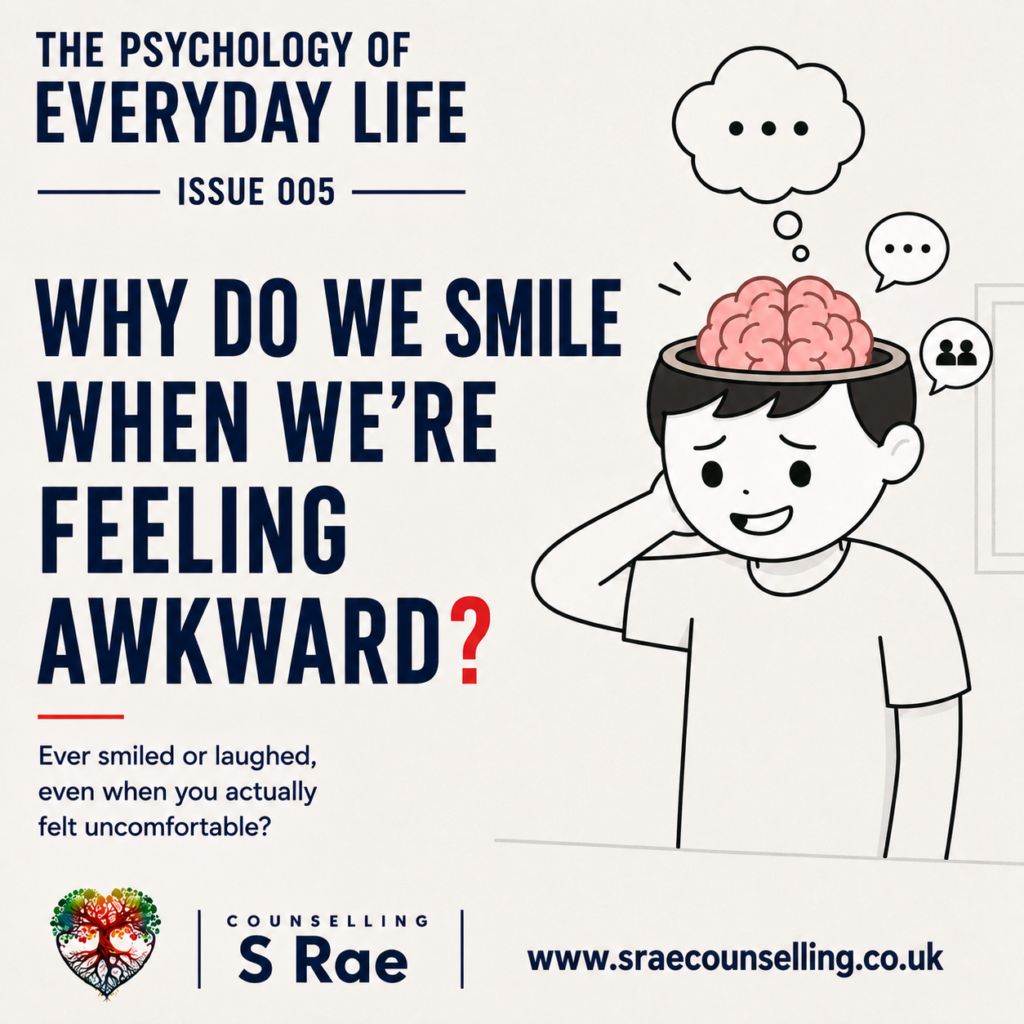
Understanding nervous smiles, social tension and the emotions we sometimes hide behind a laugh.
Many of us smile when awkward, embarrassed or unsure what to say. It can happen during a difficult conversation, after making a mistake, when receiving unexpected attention or when someone asks a personal question. Nothing feels funny, yet a smile or small laugh appears before we have time to think.
This reaction can leave us feeling confused or self-conscious. We may worry that other people will think we are not taking the situation seriously. However, an awkward smile is often an automatic response to nervousness, uncertainty or social tension rather than a sign of happiness.
Understanding why it happens can help us respond with curiosity instead of embarrassment.
Why do we smile when awkward?
Smiling is usually associated with happiness, friendliness and enjoyment, but it can communicate many different emotions.
We may smile when we feel:
- Nervous or embarrassed
- Unsure how to respond
- Overwhelmed by attention
- Worried about upsetting someone
- Uncomfortable with conflict
- Pressured to appear calm
- Concerned about how others see us
When we smile when awkward, the expression may be our mind’s attempt to make the situation feel safer. It can soften the moment, reduce tension or signal that we do not want conflict.
The smile is not necessarily a conscious choice. It may appear automatically before we have fully recognised what we are feeling.
Smiling does not always mean happiness
Facial expressions are not always a perfect reflection of what is happening internally.
A person may smile while feeling anxious. Someone may laugh briefly while embarrassed. Another person may appear cheerful while trying to hide discomfort or uncertainty.
This is why it is important not to assume that a smile always means someone is comfortable.
An awkward smile might be saying:
“I don’t know what to say.”
“I hope everything is okay.”
“I feel exposed.”
“I don’t want this to become a conflict.”
“I’m trying to manage how uncomfortable this feels.”
Recognising this can help us become more compassionate towards ourselves and other people.
How the nervous system influences an awkward smile
Awkward situations often contain uncertainty. We may not know what another person expects, whether we have said the wrong thing or how we are being perceived.
Our nervous system can respond to this uncertainty before our conscious mind has decided what to do.
We might notice ourselves:
- Smiling or laughing
- Looking away
- Touching our face
- Fidgeting
- Speaking quickly
- Apologising unnecessarily
- Trying to change the subject
These behaviours can help release tension or reduce the feeling of being under pressure.
When we smile when awkward, it may be part of the body’s attempt to regulate discomfort. The expression gives us something familiar to do while we process the situation.
It does not mean that we find the moment funny. It may simply mean that our nervous system is trying to help us cope.
Smiling can be a way of communicating safety
Smiling is also a powerful social signal.
In an uncertain situation, a smile may communicate friendliness and reassurance. Without consciously choosing it, we may be trying to show:
“I mean no harm.”
“I want us to get along.”
“I’m not angry.”
“I hope you’re not upset with me.”
This can be especially common for people who are sensitive to tension or disapproval. They may have learned that appearing pleasant, calm and agreeable helps relationships feel safer.
The smile becomes less about happiness and more about keeping the social situation under control.
Why some people smile when awkward more than others
Our responses to uncomfortable situations are shaped by past experiences.
Someone who was regularly criticised, embarrassed or made to feel difficult may learn to hide discomfort behind a smile.
A person who grew up around conflict or unpredictable moods may become highly aware of other people’s reactions. Smiling may have helped them prevent arguments, gain reassurance or reduce tension.
Others may have learned that expressing anger, sadness or disagreement was unacceptable. They may feel safer smiling than showing what they genuinely feel.
Over time, this response can become automatic. A person may continue to smile when awkward even when the original reason for doing so is no longer present.
This does not mean they are being dishonest. It may mean their mind has developed a familiar way of protecting them.
Why do we sometimes laugh during serious moments?
Nervous laughter is another common response to discomfort.
It can happen during serious conversations, stressful situations or moments when someone feels emotionally overwhelmed. The laughter may briefly release tension and give the person time to process what is happening.
This can be distressing, especially if the reaction seems inappropriate to the situation. The person may worry that they appear insensitive or uncaring.
However, nervous laughter does not necessarily reflect what someone truly feels. It can be an involuntary response to anxiety, shock, embarrassment or emotional overload.
Understanding this can help reduce the shame people sometimes feel about their reaction.
When an awkward smile hides our real feelings
Occasionally smiling through discomfort is completely normal.
It may become more difficult when the smile prevents us from communicating our needs, feelings or boundaries.
We might smile while:
- Agreeing to something we do not want
- Pretending that a hurtful comment did not affect us
- Minimising anger or disappointment
- Avoiding an important conversation
- Trying to appear comfortable when we feel unsafe
- Saying that everything is fine when it is not
In these situations, the smile can create confusion.
Other people may not realise that we are upset because our expression suggests that everything is okay. We may also begin to lose touch with our own feelings because we are so focused on appearing pleasant or acceptable.
Are we trying to protect other people?
Sometimes we smile because we are trying to manage another person’s emotions.
We may smile while saying no because we do not want them to feel rejected. We may laugh after expressing an opinion because we are worried they will disagree. We may soften a boundary because we do not want to appear unkind.
This is particularly common among people who feel responsible for keeping everyone else comfortable.
They may believe:
“I need to make this easier for them.”
“I don’t want them to think I’m difficult.”
“I should keep the atmosphere positive.”
“My feelings might upset someone.”
The problem is that constantly protecting other people from discomfort can leave little room for our own needs.
What to notice when you smile when awkward
The next time you notice yourself smiling during an uncomfortable moment, try not to judge the reaction.
Instead, pause and become curious.
Ask yourself:
What am I feeling underneath the smile?
You may be nervous, embarrassed, uncertain, upset or afraid of being judged.
Am I trying to make someone else comfortable?
Consider whether you are taking responsibility for reducing tension.
Does my expression match what I want to communicate?
A smile may accidentally suggest that you are more comfortable or agreeable than you actually feel.
What do I need right now?
You may need time to think, reassurance, space or permission to say no.
Becoming aware of the reaction does not mean you must stop smiling. It simply helps you understand what the smile may be doing for you.
Responding more honestly
When an awkward smile makes it difficult to communicate clearly, it can help to gently name what is happening.
You might say:
“I know I’m smiling, but I’m actually feeling quite nervous.”
“I’m not sure how to respond yet.”
“This is a little uncomfortable for me, so I need a moment.”
“I’m laughing because I feel awkward, not because I think it’s funny.”
“I want to be honest about how this feels.”
These statements can reduce misunderstanding and allow your words to reflect your genuine emotional experience.
You do not need to explain everything immediately. Simply acknowledging that you feel uncomfortable can be an important step.
There is nothing wrong with an awkward smile
The tendency to smile when awkward does not mean that you are immature, insincere or failing to take a situation seriously.
It may be an automatic response to social tension, a way of releasing nervous energy or a behaviour that once helped you feel safe.
Rather than criticising yourself, try to understand what is happening beneath the expression.
Sometimes a smile means, “I’m happy.”
At other times, it means, “I’m trying to manage this moment.”
Both reactions are human.
Counselling can help
When nervousness, people-pleasing or fear of conflict makes it difficult to express how you genuinely feel, counselling can provide a safe and supportive place to explore these patterns.
Understanding why you smile when awkward can help you recognise the emotions beneath the reaction, communicate more confidently and develop healthier boundaries.
To arrange a free 30-minute consultation with S Rae Counselling:
📞 07895 843287
📧 sraecounselling@gmail.com
🌐 www.sraecounselling.co.uk