
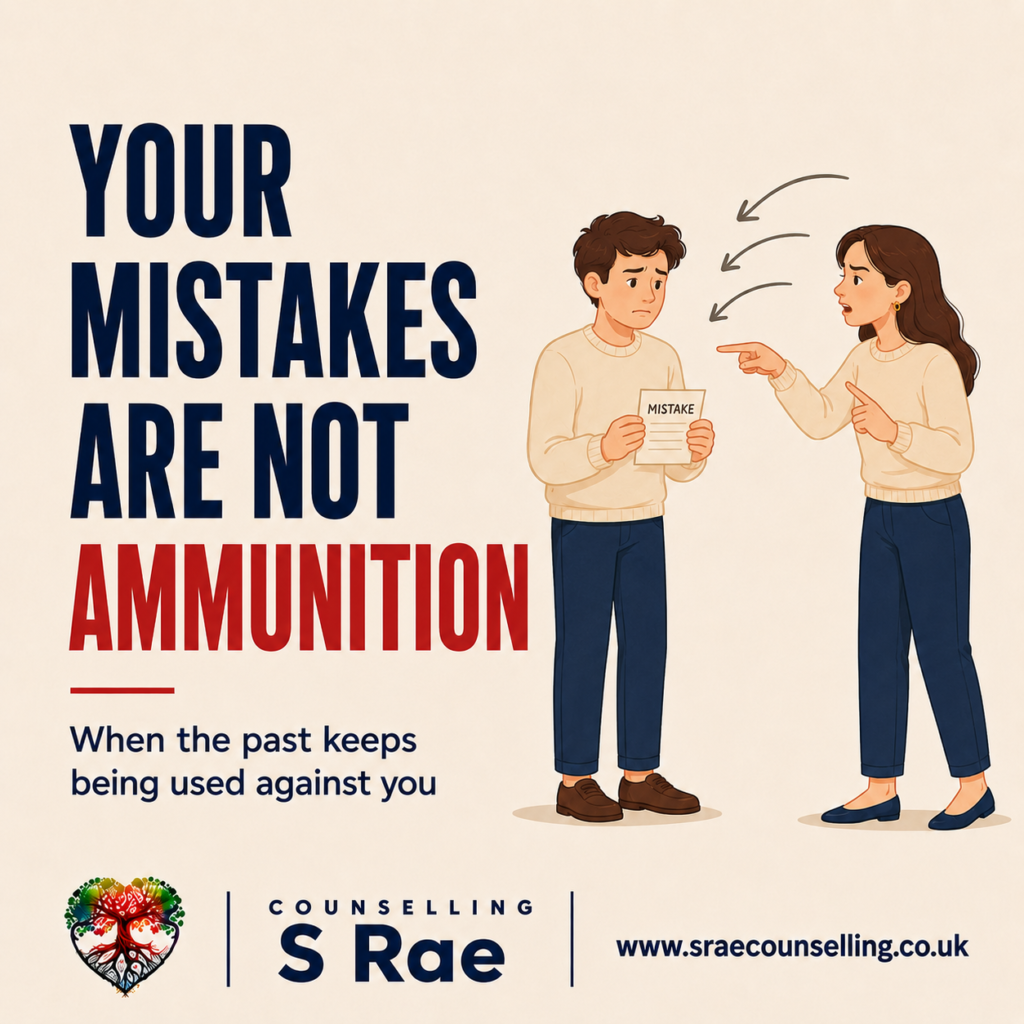
Everyone makes mistakes in relationships.
You forget something important.
You say something you later regret.
You fail to do something you promised.
Someone may understandably feel hurt or disappointed.
In healthy relationships, those situations can normally be discussed.
Someone explains how they feel.
The other person listens.
There may be an apology.
And eventually the relationship moves forward.
But sometimes a mistake isn’t allowed to disappear.
When the Past Keeps Returning
Perhaps you forgot an anniversary several years ago.
You apologised.
You accepted that it caused hurt.
Yet somehow it appears during completely unrelated disagreements.
“You forgot my anniversary.”
“You’ve always been like this.”
“After what you did, you can’t criticise me.”
Suddenly one mistake becomes evidence against your entire character.
This can create an unhealthy imbalance.
One person permanently occupies the position of the injured party while the other is expected to keep making amends.
Emotional Ammunition
Past mistakes can sometimes become emotional ammunition.
Instead of discussing the disagreement happening today, someone reaches into the past and brings back previous mistakes.
This can make resolving conflict extremely difficult.
You may find yourself repeatedly defending something that happened months or years earlier rather than addressing the current problem.
Eventually you may begin avoiding disagreements altogether because you already know what will be brought up.
When Guilt Becomes Control
Guilt is a normal emotion.
If we hurt someone, guilt can encourage us to apologise and behave differently.
But guilt can also be exploited.
If someone continually reminds you of previous mistakes in order to influence your decisions or prevent you from challenging their behaviour, guilt may become a form of emotional control.
You might begin thinking:
“I can’t complain because of what I did.”
“I owe them.”
“I’ll just agree because I don’t want another argument.”
That isn’t necessarily evidence of narcissism, but repeatedly weaponising someone’s mistakes can appear within manipulative or controlling relationship patterns.
Healthy Relationships Allow Resolution
Healthy relationships don’t require us to pretend mistakes never happened.
But they do allow genuine resolution.
An apology should not become a lifelong contract giving another person the upper hand.
Ask yourself whether disagreements are actually being resolved or simply stored for later.
Your mistakes matter.
So does accountability.
But your mistakes should not become permanent ammunition that someone can use whenever they need to win an argument.