
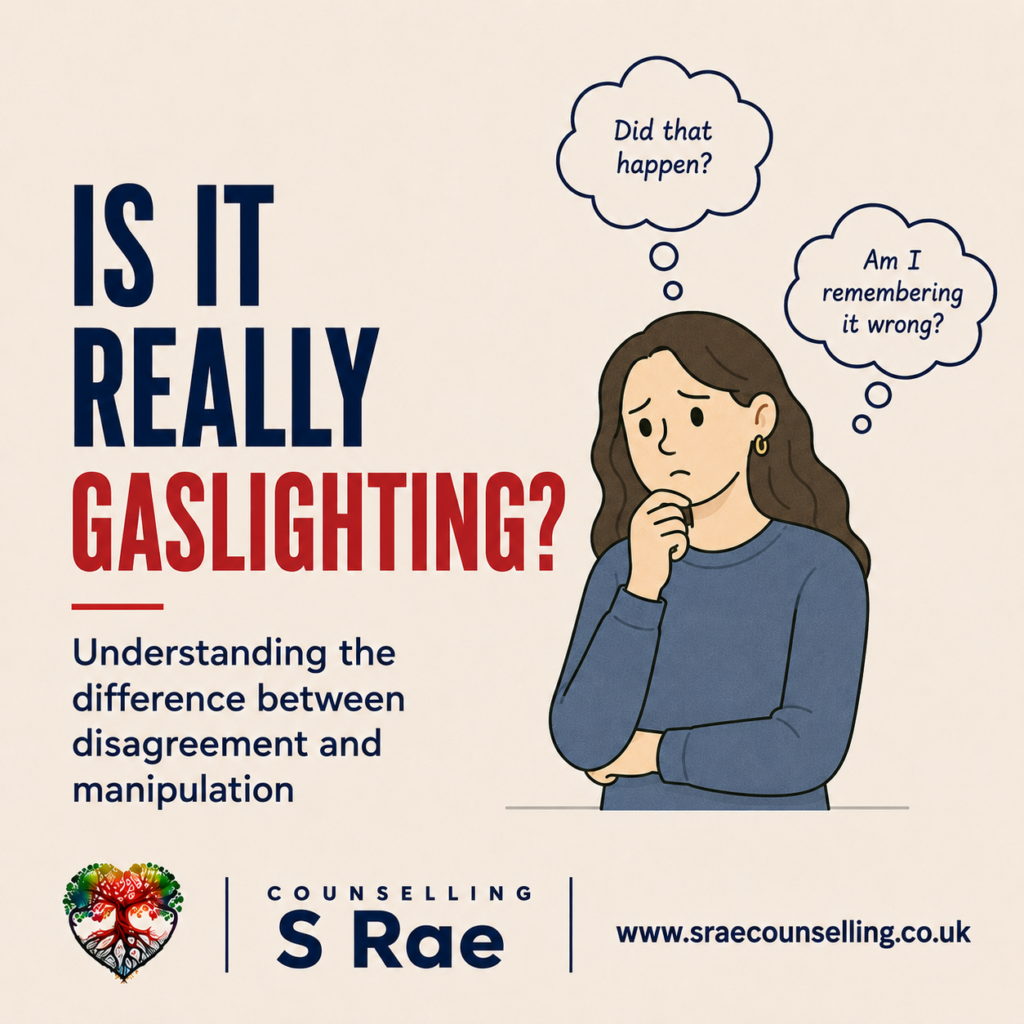
The term gaslighting has become part of everyday conversation.
Someone disagrees with us — gaslighting.
Someone remembers something differently — gaslighting.
Someone denies doing something — gaslighting.
But gaslighting is more specific than ordinary disagreement.
Understanding the difference matters.
What Is Gaslighting?
Gaslighting describes a pattern of behaviour in which someone causes another person to question their perception, memory or judgement.
Statements may include:
“That never happened.”
“I never said that.”
“You’re imagining things.”
“You always remember things incorrectly.”
“You’re being too sensitive.”
A single disagreement does not automatically mean someone is gaslighting you.
The concern is the repeated pattern and its effect.
Questioning Yourself
Over time, someone experiencing gaslighting may become increasingly uncertain.
You might start wondering:
“Did I remember that incorrectly?”
“Maybe I am overreacting.”
“Perhaps everything really is my fault.”
Eventually, you may rely more heavily on the other person’s interpretation of events than your own.
That can dramatically change the balance within a relationship.
Gaslighting Versus Guilt-Tripping
Guilt-tripping is different.
If someone says:
“You forgot my birthday and that really hurt me.”
that isn’t gaslighting.
If they repeatedly use the forgotten birthday to make you feel guilty, that may become emotional manipulation.
If they begin changing what happened, denying conversations or insisting that events occurred differently from how you remember them, then the behaviour may move closer to gaslighting.
Patterns Matter
Words such as narcissism, manipulation and gaslighting can be useful when they help us understand behaviour.
But labels shouldn’t replace looking carefully at what is happening.
Ask:
Is my experience continually dismissed?
Am I constantly questioning my own memory?
Does the other person’s version of events always become the only acceptable version?
Do I regularly leave conversations confused about what actually happened?
Those patterns deserve attention regardless of which label ultimately applies.